Malibu Beach Inn
Malibu, California · Pacific Coast Highway
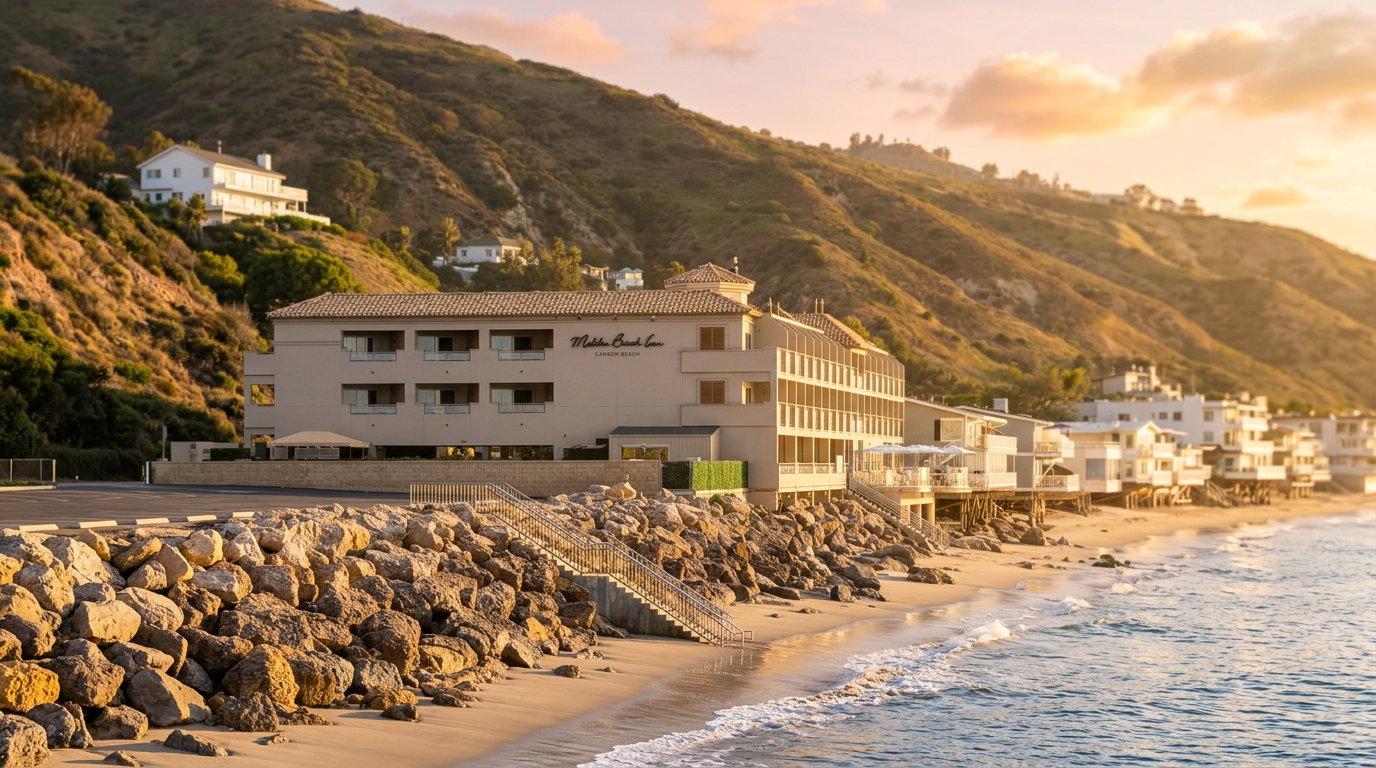
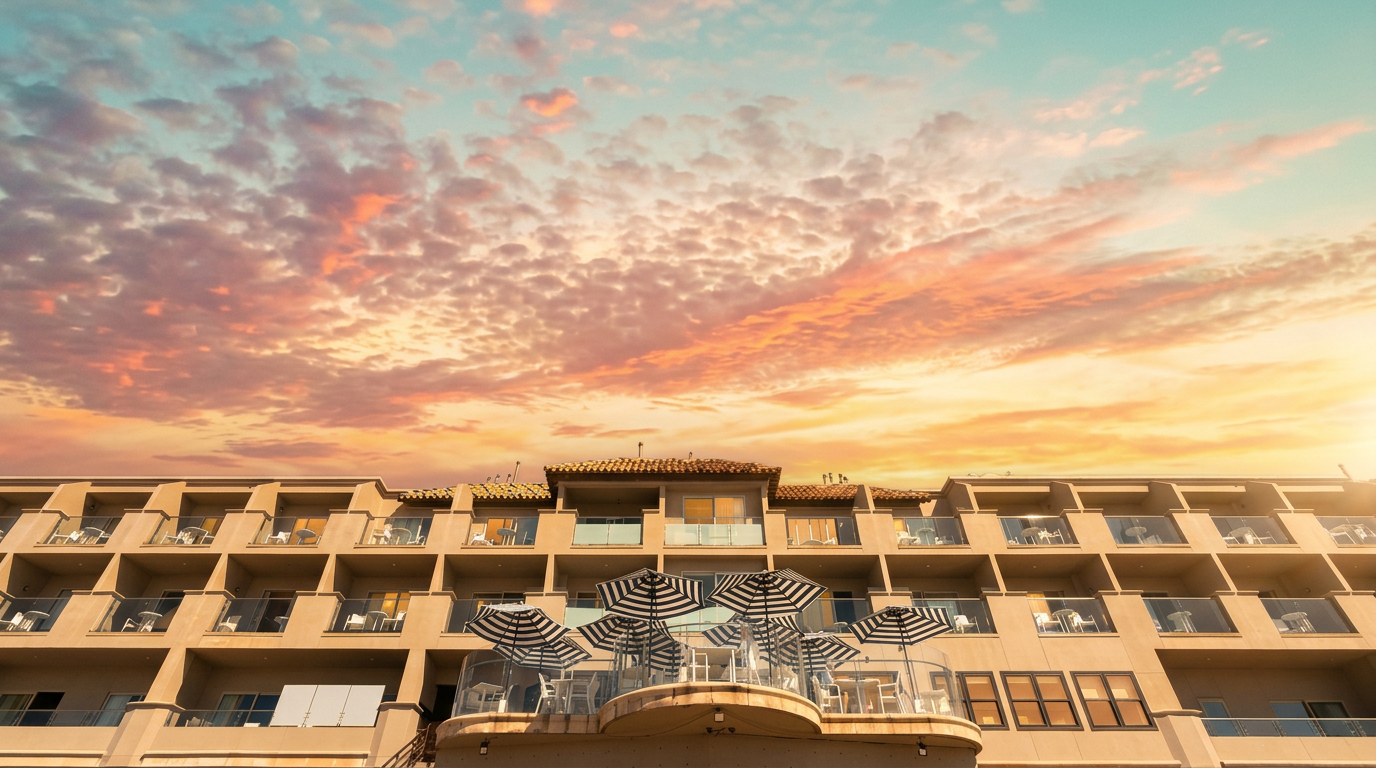
Pacific Coast Highway does not prepare you for Malibu Beach Inn. The road has been giving you the ocean for twenty minutes already, the Pacific appearing and disappearing between houses, the particular quality of afternoon light on flat water, the air changing somewhere west of Santa Monica, and by the time the inn's facade comes into view, you feel certain you understand what's being offered. You do not, quite.
More considered than almost anything along this stretch of coast, the inn sits directly on the highway, which sits directly on the beach, which sits directly on the Pacific. No buffer zone, no manicured approach, no polite distance from the thing itself. This turns out to be the central argument for the place. You are not adjacent to the ocean. You are beside it the way you might be beside a person: close enough that its temperament becomes your own.
We arrived before check-in. The staff welcomed us without ceremony and directed us toward CURE, their partner wellness facility north on PCH, with the kind of enthusiasm that suggested they had been there themselves that morning. It is the kind of recommendation that sets the tone: elevated in taste, entirely down to earth in delivery. The hotel knows its neighbourhood.
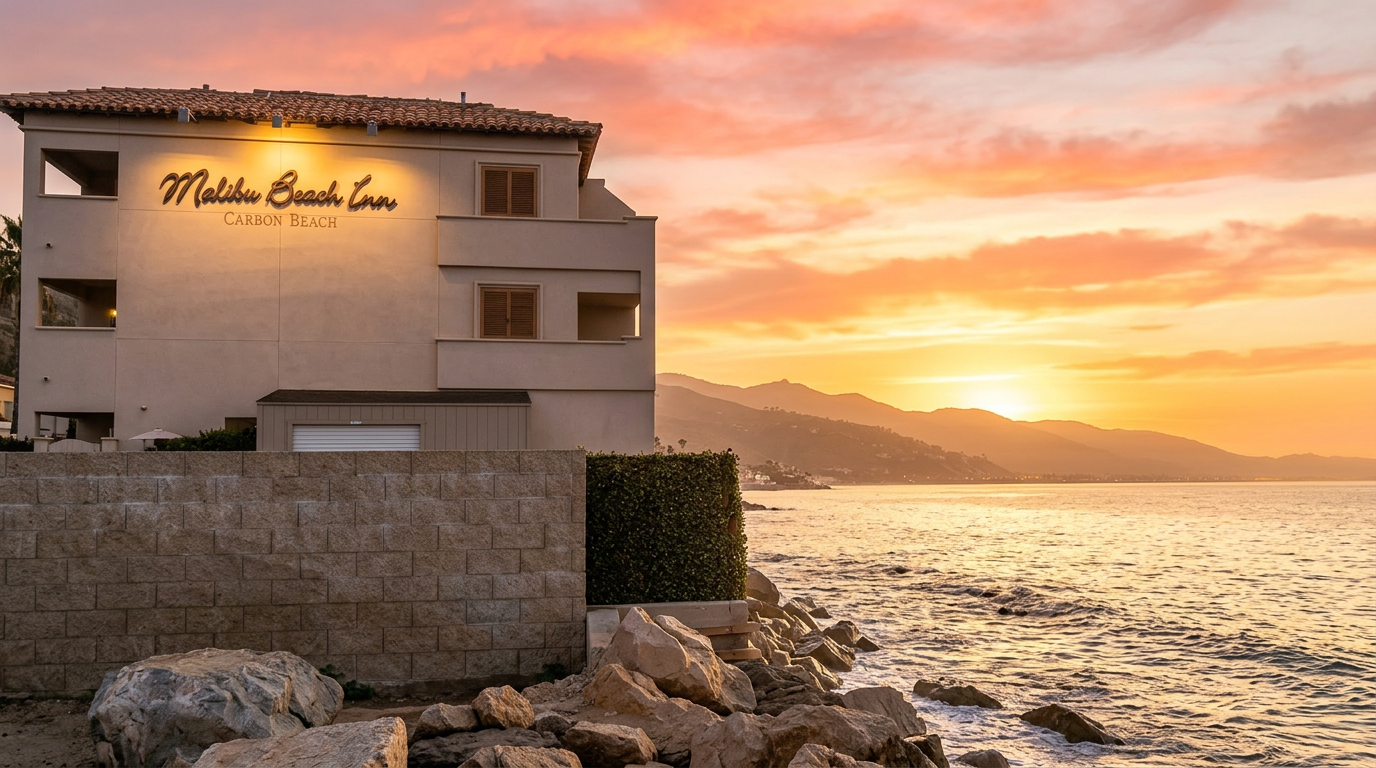
The inn's architecture does not traffic in grandeur. What it offers instead is precision. The lobby functions as a threshold space, compressed and quiet, already carrying the acoustic register of the ocean before the water is visible, and the bar off to its left is exactly the right size: intimate without feeling crowded, built for the end of a day rather than for the performance of having arrived somewhere notable. The materials are considered throughout. Nothing is ornate. Everything is earning its keep.
A breezeway connects the main building to the beach-facing rooms, and walking through it produces a specific kind of pleasure: the moment the ocean fills the frame completely, sound and sight arriving together, the world reorganizing itself around this new information. Good hospitality architects understand this: not the reveal as spectacle, but the reveal as transition. The precise moment when a guest stops thinking about the hotel and starts thinking about where they are.
Malibu Beach Inn understands this. The building is not trying to compete with what is outside. It is trying to make the outside more available to you. This is a quieter ambition than most hotels pursue and, in our experience, a considerably rarer one.

CURE operates at the level the rest of the stay does: clean, considered, and maintained like new. The gym is well-equipped throughout, free weights and full racks in genuine working order, with Malibu's early light coming through the windows in a way that most hotel gyms would pay for if they could. The steam room is properly hot and properly maintained. The infrared sauna offers a different register from conventional heat, deeper and slower, with an effect closer to stillness than to discomfort. By the time we walked back along PCH, the morning had been well spent. The day had been remade.
Brunch at Carbon Beach Club is its own event, and the word event is used deliberately. You do not eat breakfast here and then get on with the day. The day arranges itself around the meal.
The restaurant is positioned so that the Pacific is the dominant element in your visual field for the duration of the sitting. On a clear morning the water extends from beneath the terrace to the horizon without interruption, moving constantly, changing register as the light progresses through its early angles. You find yourself looking at it between every few bites. This is not distraction. This is what the room is for.
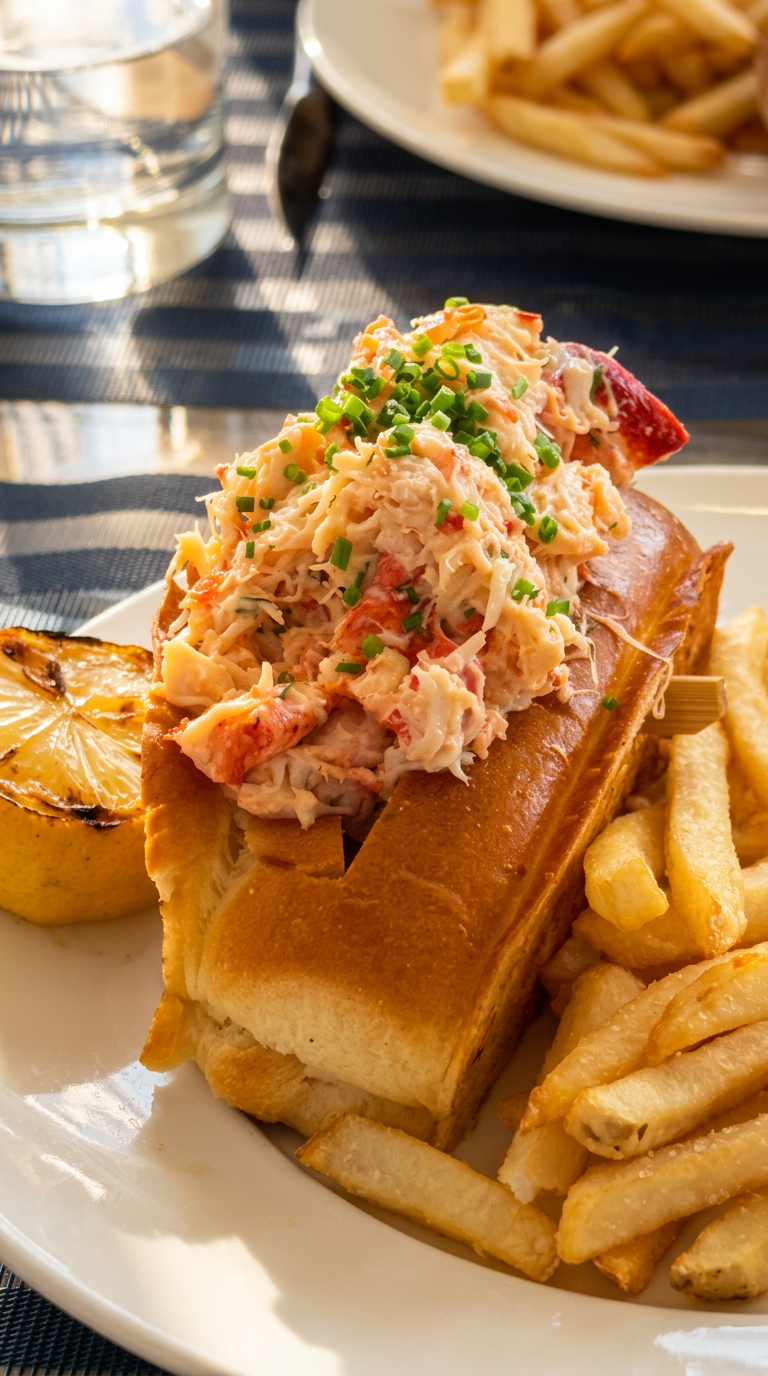
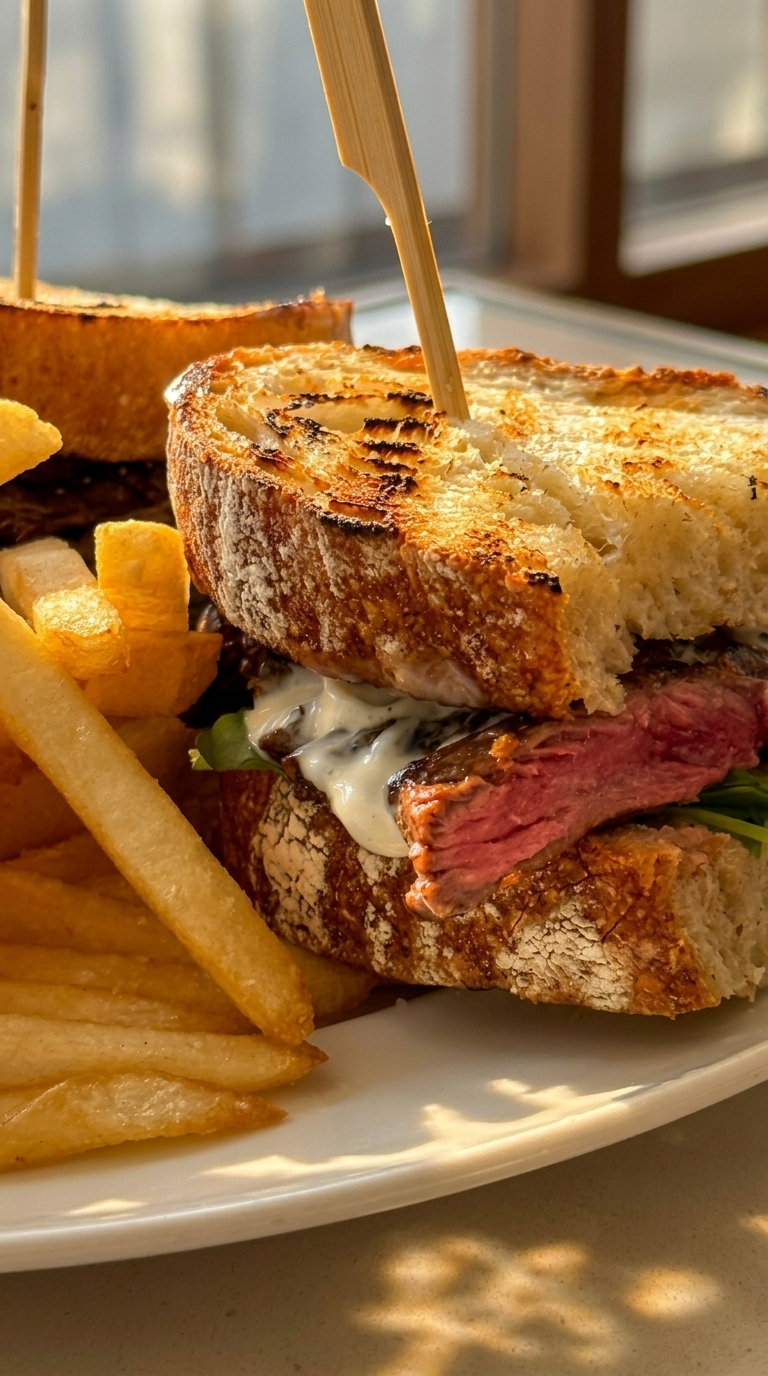
The food holds its own against this competition. The Lobster Roll is exceptional: the lobster sweet and generous, the preparation restrained enough that the ingredient remains the subject, the bread providing structure without asserting itself. The steak sandwich occupies the same register: precise, confident, built around a single good decision rather than a series of clever ones.
These are not dishes designed to photograph well, though they do. They are designed to taste correct. The distinction, in our experience, is not a small one.
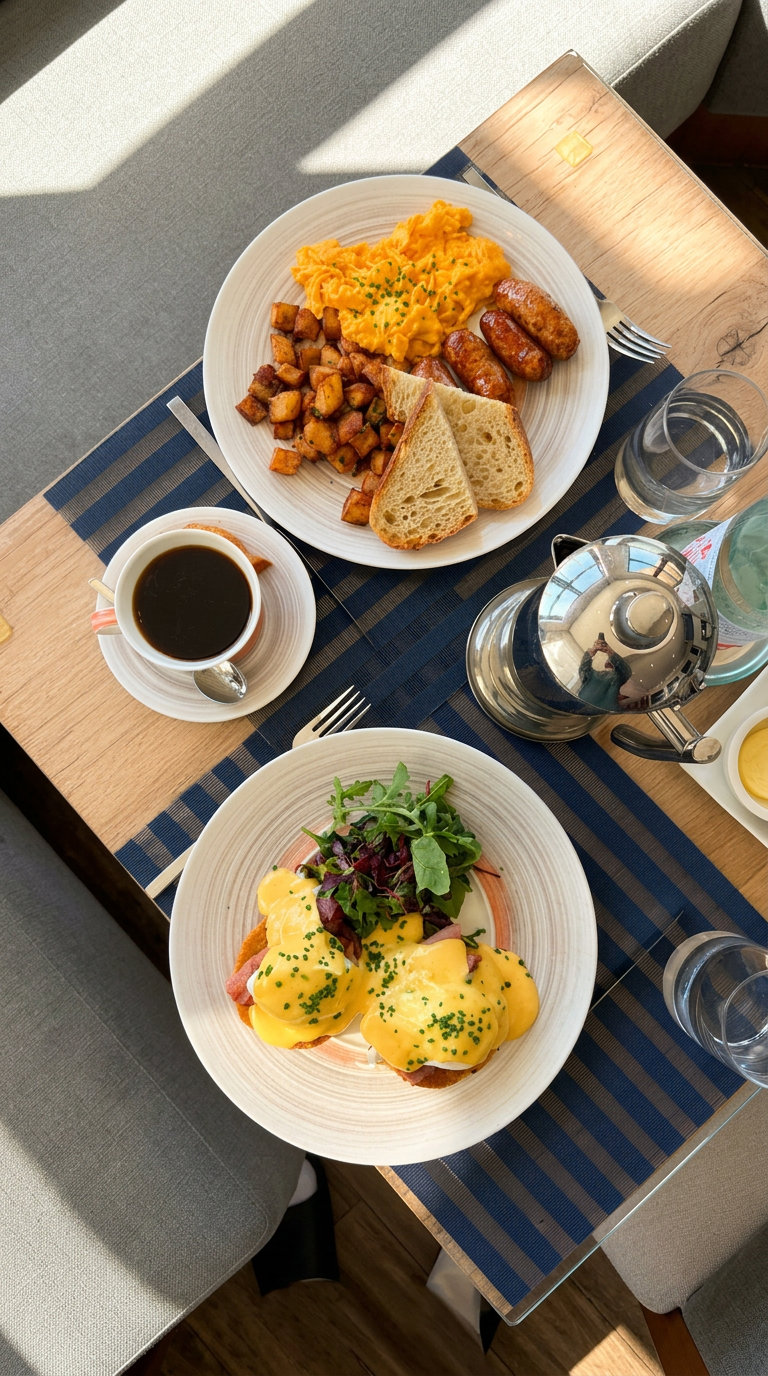
Service during brunch has the quality that distinguishes genuine hospitality from the performance of it: present without hovering, attentive to the actual state of the table rather than to an idealized version of it. Coffee arrived before we had to think about asking for it. The pacing was right. No one rushed us. No one made us feel that the table was needed.
The bar carries the same ease as the rest of the place, quieter in the late afternoon, the kind of space that earns its keep simply by understanding what people need at the end of a good day. The light on the water at that hour does most of the work. The hotel has the good sense not to compete with it.
What the restaurant understands, at its best, is that a meal beside the Pacific is not simply a meal with a view. The location is an ingredient. The kitchen does not mistake its advantage for a substitute for quality. It offers both, without commentary.
There is a particular quality to the sound of the Pacific that you don't fully register until you've been beside it for some time. It is not constant. It follows a rhythm that your nervous system begins to track without your permission, and this tracking produces a gradual slowing of interior tempo that most forms of rest cannot replicate. You become less urgent. The sound of waves against a beach below your window, at midnight, is one of the most reliable sedatives known to hospitality, and unlike most sedatives, it has no ceiling.
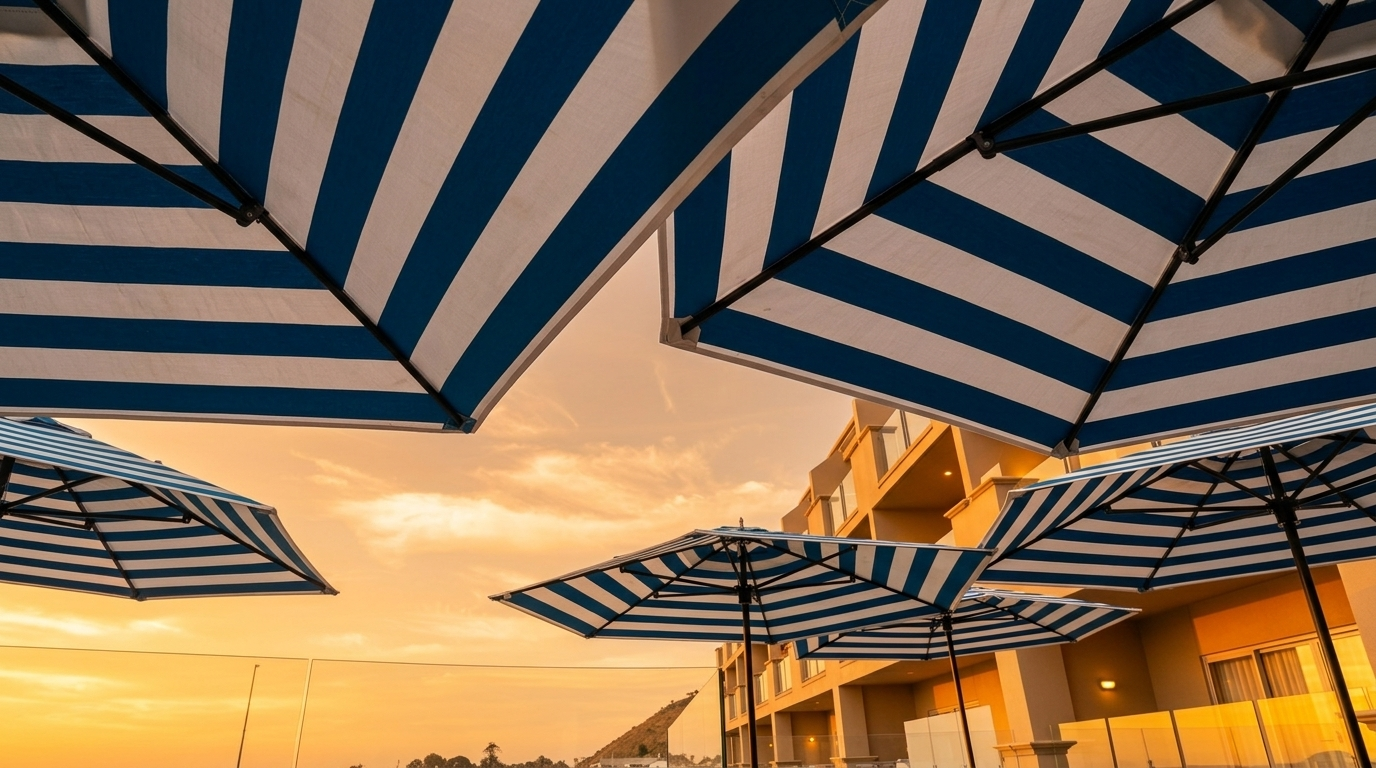
The light at Malibu Beach Inn changes across the day with a fidelity that rewards attention. In the mornings it arrives low and warm from the east, crossing the water before it reaches the windows, so that the first light of the day has already travelled a long way and carries the quality of something earned. By midday it is flat and impartial, revealing everything without flattery. In the afternoons, the ocean picks up a different register, deeper blues, occasional silvers where the surface catches the angle, and the room fills with reflected light from the water that shifts continuously on the ceiling and walls. By evening, the entire western horizon performs without any assistance from the hotel.
None of this is arranged by the property. The hotel simply has the intelligence to stay out of the way of it. This sounds easier than it is.
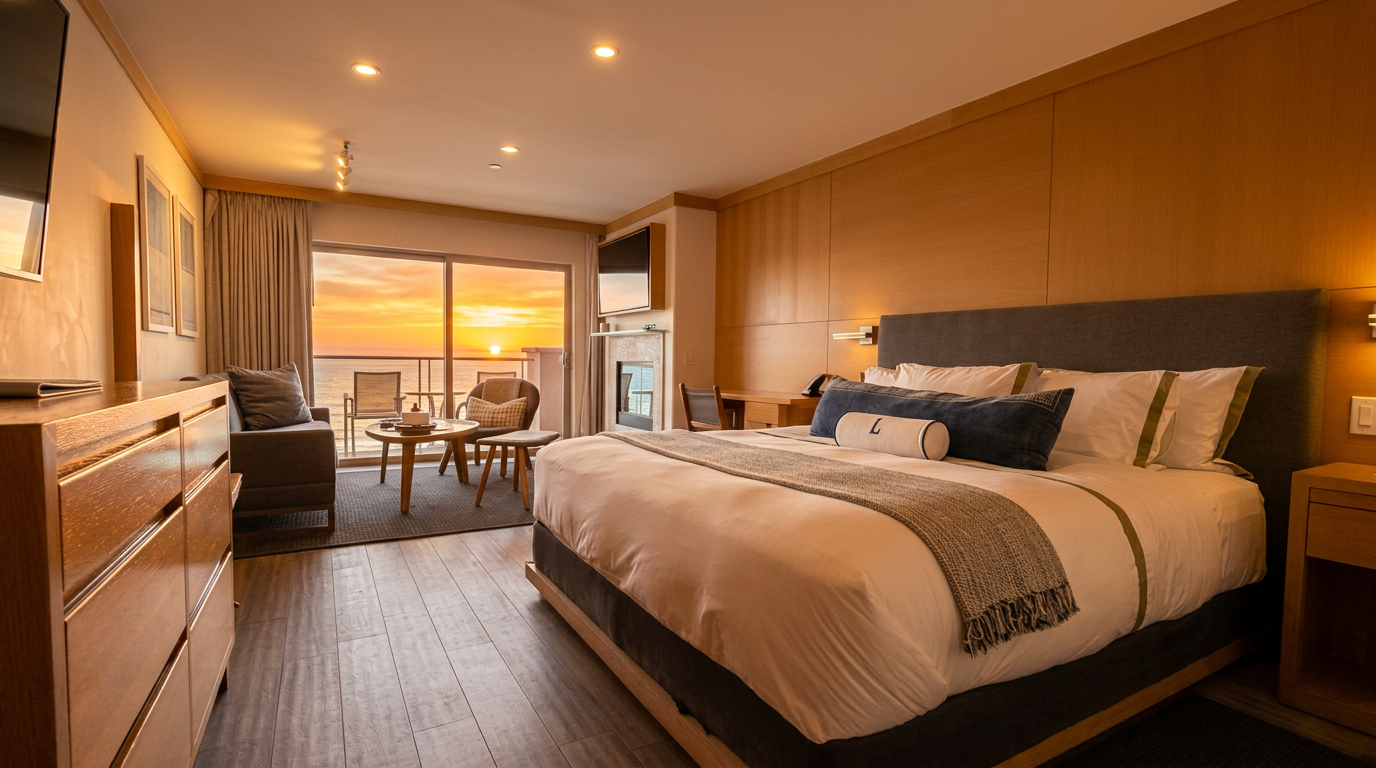
The first impression is the view: immediate, complete, the Pacific filling the window, and the initial instinct is to stand at the glass and simply watch. We did this for longer than we had planned. There is no appropriate duration for standing at a window like this. You stop when you stop.
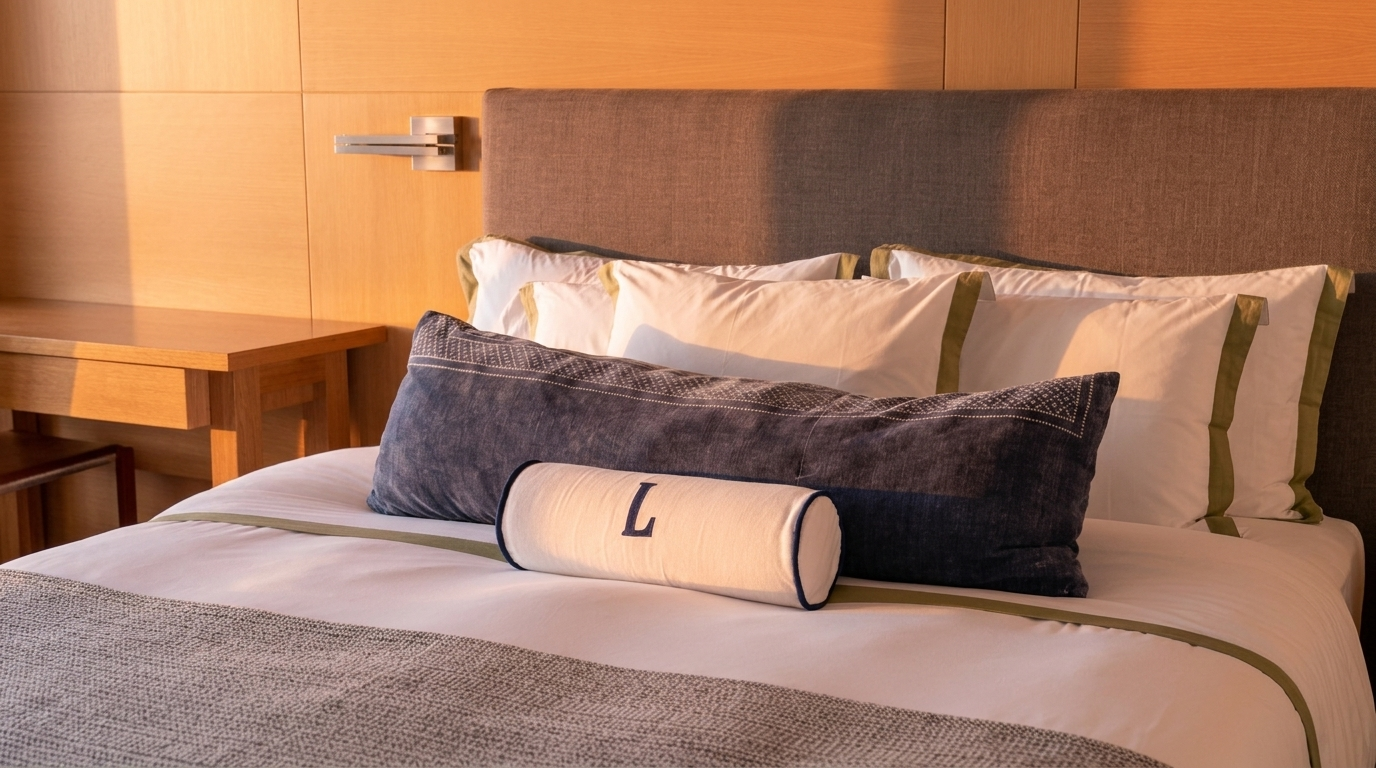
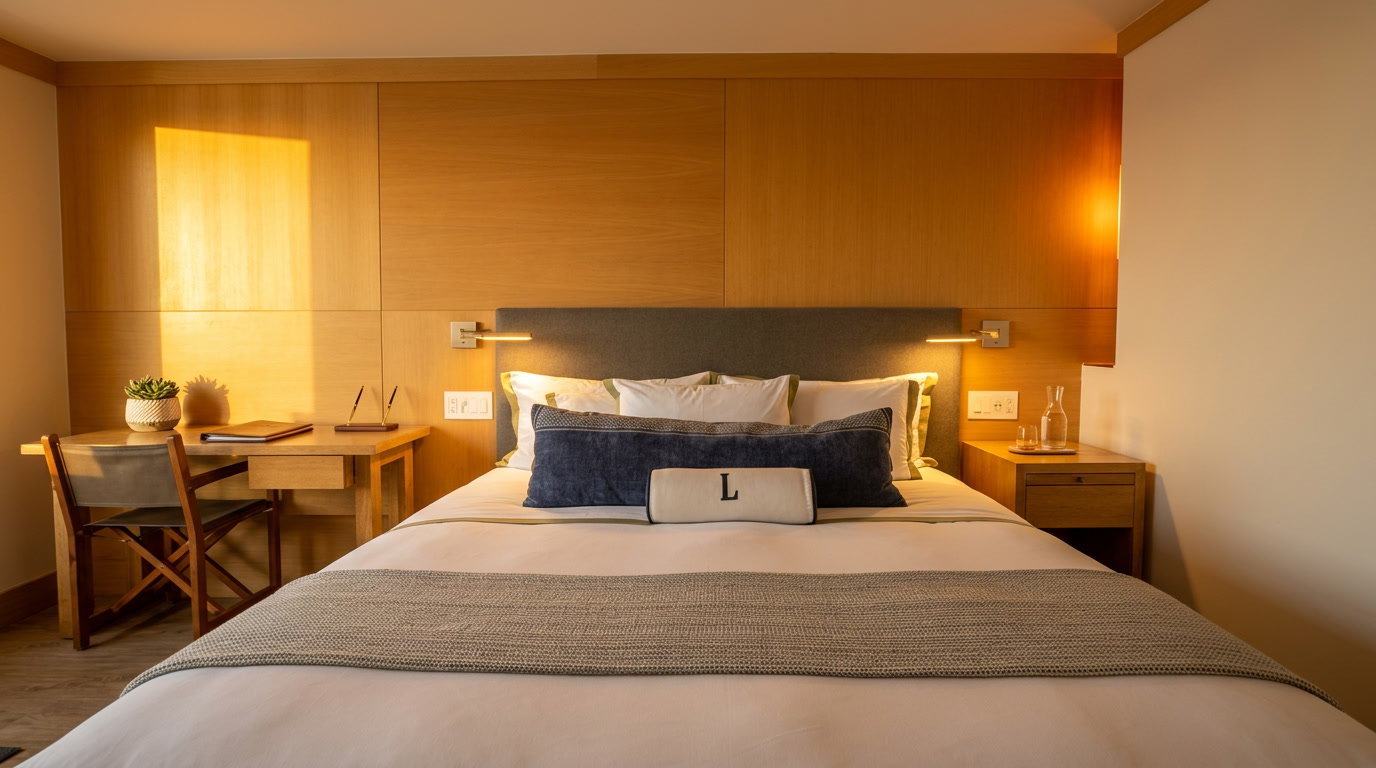
The furnishings are correct for the purpose: comfortable, quiet, designed to recede. The bed is made in the manner of hotels that understand that the bed is not a decorative object but a functional one, and that the difference between a good night's sleep and a poor one is rarely about thread count and almost always about the mattress, the pillow, and the quality of dark available to the room when the curtains are drawn.
We used the room to work on the second day. The quality of the light makes this feel appropriate rather than obligatory. There is something about working with the ocean in your peripheral vision that keeps the mind from closing in on itself. We worked well. We stopped at the right time. We read in the early evening with the window open, the sound of waves organizing the hours into something more bearable than a schedule.
The bathroom is well-proportioned and well-lit for the things bathrooms need to be well-lit for, with products that are good enough not to make you wish for your own. These are the details that constitute the experience of a room long after you've stopped consciously noticing them.
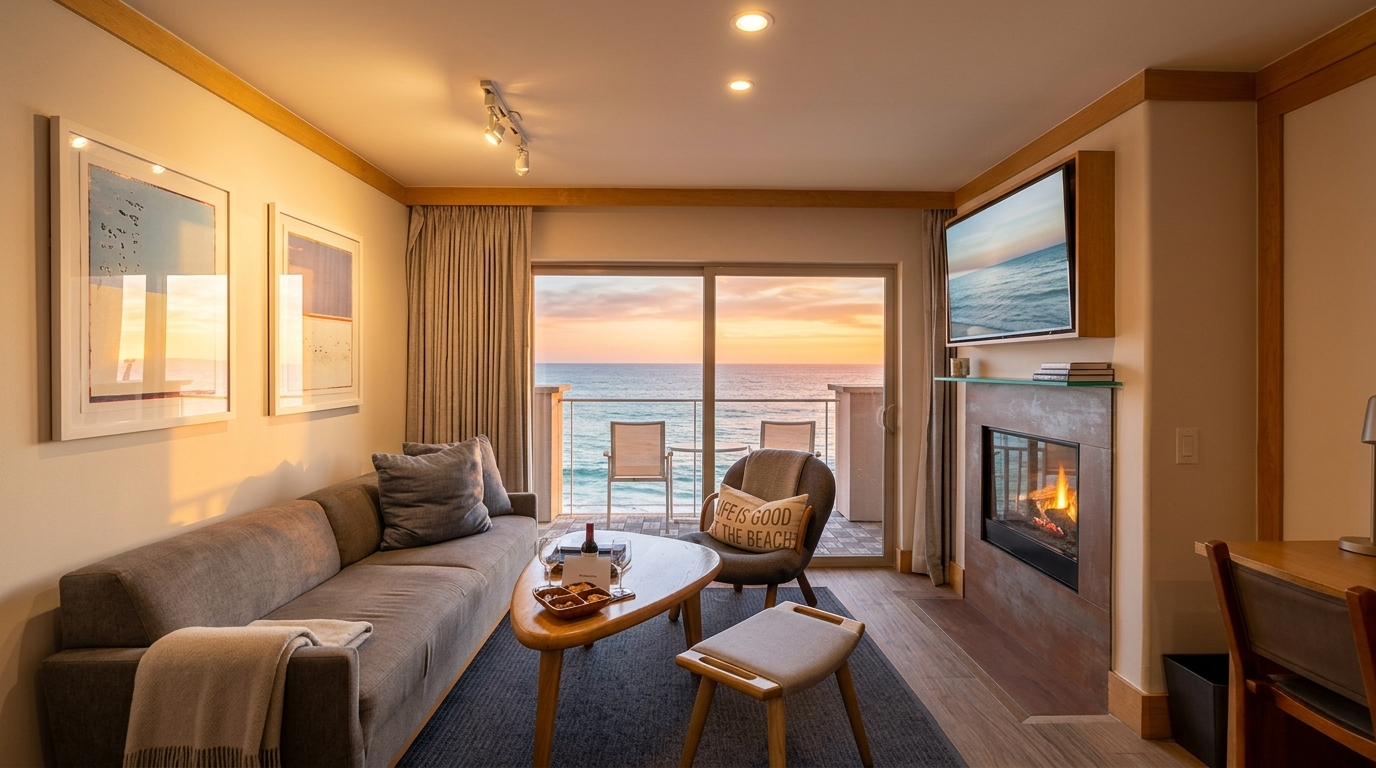
The things that make a hotel room genuinely good are almost never the things that appear in the room description. What matters is proportionality: whether the ceiling height relates correctly to the floor area, whether the desk is positioned where the light is useful, whether the sound insulation is sufficient to make the room feel private, and whether anyone, at any point in the design process, asked what it would actually feel like to spend forty-eight hours here and then answered the question honestly.
Malibu Beach Inn's rooms have been thought about. Not in the sense of aggressive styling or aspirational concept, but in the sense of attention to use. The furniture is where the furniture should be. The light switches are where you'd want them in the dark. The curtains block the morning when you need them to and move easily when you don't. These are not remarkable achievements. Their absence, in too many hotels, is remarkable. Here they are simply present, the way good design should be: invisible until you try to account for why the room feels right, and then suddenly everywhere.
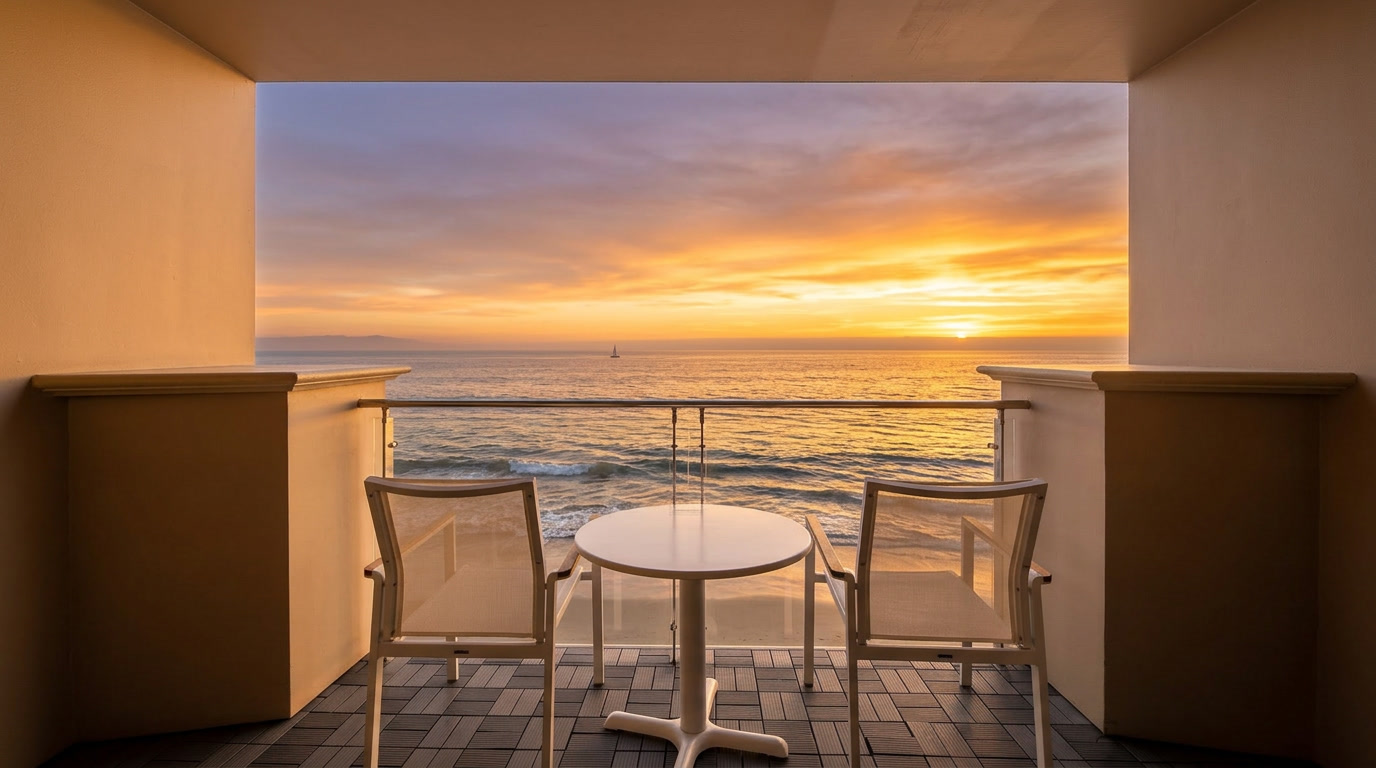
Malibu Pier is a short walk south. The walk takes you along PCH in a way that reveals the specific character of Malibu's relationship with its own geography. This is not a town that has arranged itself around tourism, or even around its celebrity associations, but around the ocean and the particular life the ocean makes available. Surfers in the early mornings. Families by midday. The long afternoon calm. The evening crowd that gathers at the pier rail to watch the day end over the water.
The inn sits at the centre of all of this without being absorbed by any of it. Its position on the highway places it in the life of Malibu's public geography, while its design keeps it private. You can step off PCH and be entirely alone within sixty seconds of arriving. The distance between the public road and the room is not physical. It is atmospheric.
This stretch of Pacific Coast Highway works equally for families, couples, and people who have arrived alone with a book and no particular agenda. The inn asks very little of you. It mostly asks that you show up.
The manager speaks about the hotel with an affection that is the first thing you notice and the last thing you forget. It is not promotional enthusiasm. It is the particular warmth of someone who has chosen a place deliberately and continues to believe in that choice. Presence across the stay was well-calibrated: available at the moments when availability mattered, absent when absence was more useful. The instinct for when to be in the room and when not to be is a skill that cannot be trained at scale and cannot be faked for long.
The rest of the team occupy the same register. The conversations were genuine. There was no sense of a script being followed, or of the interaction being managed toward a satisfactory outcome. These are the conversations that constitute the actual experience of a hotel stay: not the room, not the food, not the view, but the accumulated quality of human exchanges across two days.
The team's particular achievement is that the service never calls attention to itself. Things happened at the right time. Coffee was there. The room was ready when it needed to be. No one made anything of it. This effortlessness is the most effortful thing a hotel can produce, and the one most rarely managed. Malibu Beach Inn manages it.
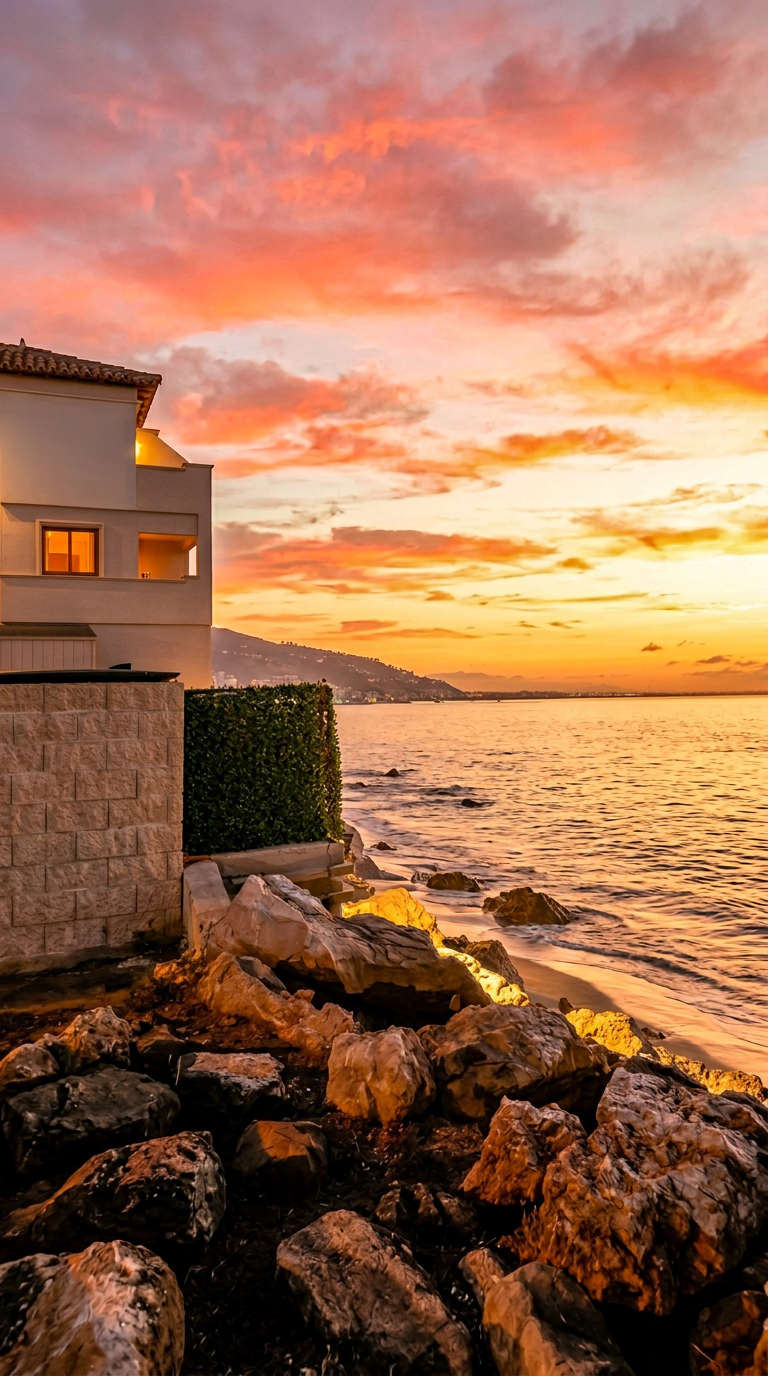
We left on a morning that was everything Malibu promises: clear sky, the Pacific lit up, sun off the water in a way that made departure feel like poor planning. The departure was mildly reluctant, which is the correct emotional register for leaving somewhere that has been genuinely good to you. Not drama. Just the mild drag of not being ready.
Malibu Beach Inn earns this feeling honestly. It does not oversell itself. It does not perform at you. It understands that the primary experience it offers is not a hotel but a location, a specific stretch of California coast, a particular relationship between built space and open water, and it builds around that understanding with care and without excess. The ambition of the place is legible in everything: in the precision of the architecture, in the quality of the food, in the calibration of the service, in the facility at CURE, in the way the rooms have been thought about rather than merely furnished.
For Tsulgi, this is the kind of story we came into being to tell. Our interest in hospitality is not in expense or theatrical gesture but in the places that have understood something essential about what rest and pleasure and genuine welcome actually require. Malibu Beach Inn, on Pacific Coast Highway, cared for by people who mean it, is one of those places. We will be back. We already know it.
This editorial is available as a full magazine-format print piece — designed for print, produced to the same standard as the stay itself.
See print pricingQuestions about print or licensing.
tsulgiio@gmail.com